
Importing acoustic panels into Nigeria: what to prepare
Documents, packing, container loading and the mistakes that cost importers money. Written from shipments we have made, not from a customs manual.
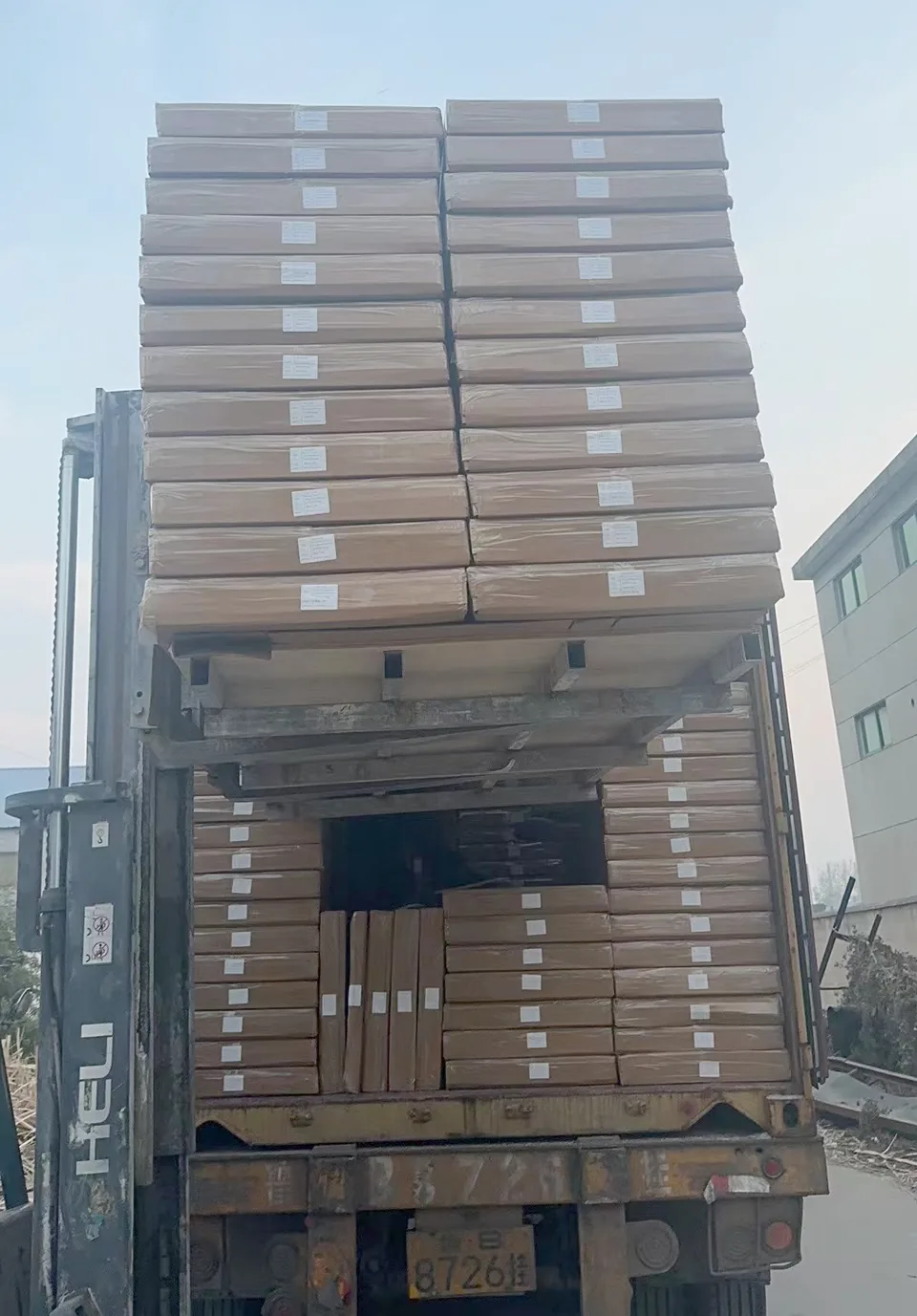
Nigeria is our largest single export market, and most of the problems importers hit are predictable. None of them are about the panel itself. This is what we have learned from shipping containers to Lagos.
1. Agree the specification in writing before the deposit
A "11 mm wood slat panel" can mean a 5 mm felt core at 800 g/m², or a 3 mm felt core at 500 g/m² with a thicker slat. Both are 11 mm. Both are legal to sell. Only one absorbs the way you quoted.
Put the felt thickness and density in the purchase order, not just the total thickness. Ask for the certificate set at the same time. This single step prevents most disputes, and any supplier who resists it is telling you something.
2. Fix the colour reference before production
Screen colours lie. A walnut on a phone looks nothing like a walnut panel in a room. Order a physical A4 sample, approve it, and retain it. Then specify "match to approved sample dated ___". On a 600 m² hotel order the sample costs less than one panel and settles any later argument about whether the batch is "the same colour".
Also agree how colour variation across production batches will be handled. Lamination on different days will not be identical. The professional answer is: keep one batch for one project, and tell us if the project will be delivered in phases so we can reserve material.
3. Understand what the packing has to survive
West African port handling is hard on cartons. Our standard is export carton, corner protectors, flat stacking, strapped pallets, 8–12 panels per carton. Three practical points:
- Pallets, not loose cartons. Loose cartons get re-handled and edges crush.
- Photographs before loading. Ask for them. A supplier who cannot send photos of packed pallets has not packed them yet.
- Two spare panels per 300 m². Damage happens. Spares cost almost nothing at the factory and cannot be bought later in the same batch.
4. Get the invoice description right
The commercial invoice, packing list and bill of lading must describe the goods consistently. Describe the product accurately — construction, size, thickness, quantity in square metres and in cartons. Vague descriptions such as "decoration materials" invite questions at the port and slow clearance.
We do not advise on duty rates; that is your clearing agent's job and it depends on how the goods are classified in your tariff. What we do is give you, on request, the material breakdown, the construction description and a certificate set — the documents an agent needs to classify the shipment and answer questions.
5. Decide FOB or CIF with your eyes open
FOB Qingdao or Lianyungang means you control the freight and the forwarder. CIF is easier but you inherit our forwarder's schedule. On a first shipment, CIF is often the right choice simply because it removes variables. Once you know the route, FOB plus your own forwarder usually costs less.
We consolidate. If you are also buying sanitary ware or tiles in China, we can deliver to a consolidation warehouse and load together — one container, one set of documents, one clearance.
6. Plan the site side before the container arrives
The most expensive mistake is not at the port. It is a container arriving at a site where nobody has checked the wall flatness. Our tolerance is 2 mm over 2 m; a plastered block wall in a new build is often 6–8 mm out. The installer then either packs out the wall — more cost — or forces the panels, and the joints open within a month.
Send us the wall survey, or ask your installer to run a 2 m straight edge over the wall before the deposit. Fixing the substrate is cheap before the panels ship and expensive afterwards.
7. Keep the paperwork for the next order
Your second order should take a fraction of the time of the first: same specification, same colour reference, same packing, same documents. Ask us to keep the approved sample and the specification on file with your company name. We do this for regular customers — it is the difference between a two-email reorder and starting again from scratch.
A checklist for a first shipment
- Purchase order states felt thickness and density, not only total thickness
- Physical colour sample approved and dated
- Certificate set received (B1, E0) and checked against your client's requirement
- Packing method confirmed in writing, pallets specified
- Packed-pallet photographs received before loading
- Invoice, packing list and B/L descriptions consistent
- Freight terms and destination port confirmed
- Site wall flatness checked with a 2 m straight edge
- Two spare panels per 300 m² included
Send us your order details and we will quote against them point by point.
Ask about your own project
Send the room dimensions and the complaint. We will answer with a panel schedule and an FOB price — and say so if a panel will not solve it.