
Six rooms, six acoustic answers
The same panel range is specified differently in each case. What changes is the thickness, the mounting method and how much of the wall you treat. Below is what we recommend in practice, room by room.
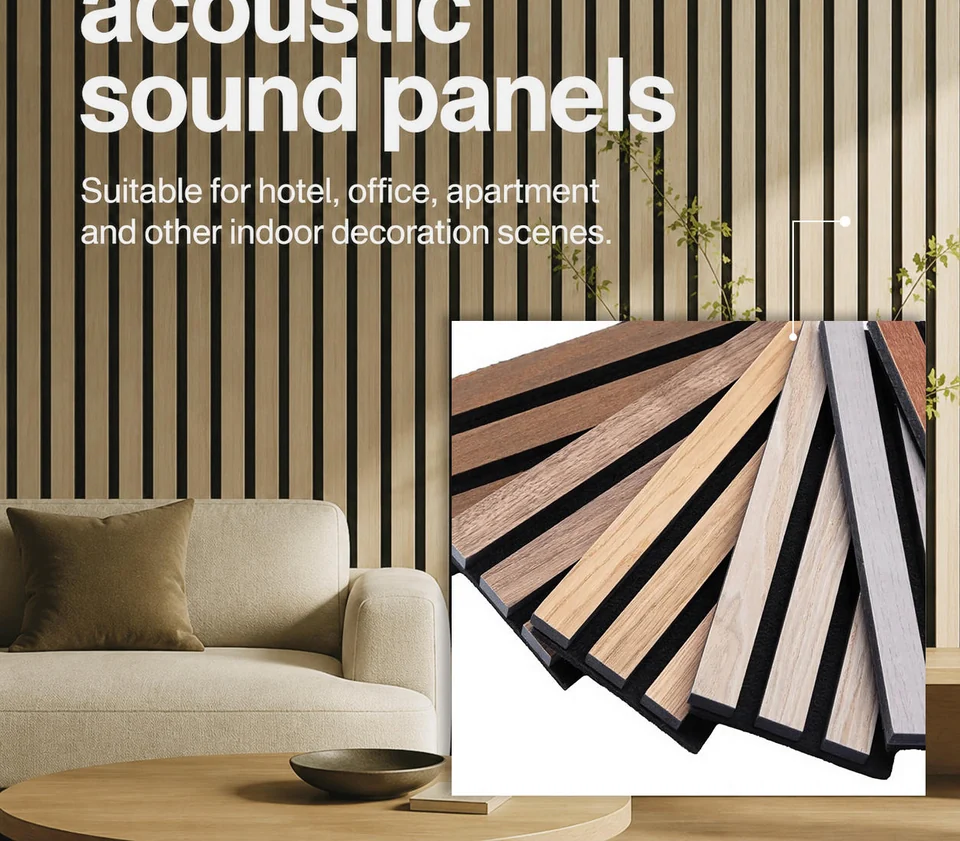
Offices & Meeting Rooms
The problem is not noise level, it is intelligibility. Glass partitions, hard floors and a flat ceiling leave a meeting room where people ask each other to repeat.
What we recommend
- 11 mm straight panel on corridor and lift-lobby walls
- 16–18 mm on the wall behind and opposite the speaker
- Cover 30–40% of the wall area — covering every wall makes the room feel dead and tiring
Most meeting-room complaints are solved by treating two opposing walls, not by treating the ceiling.
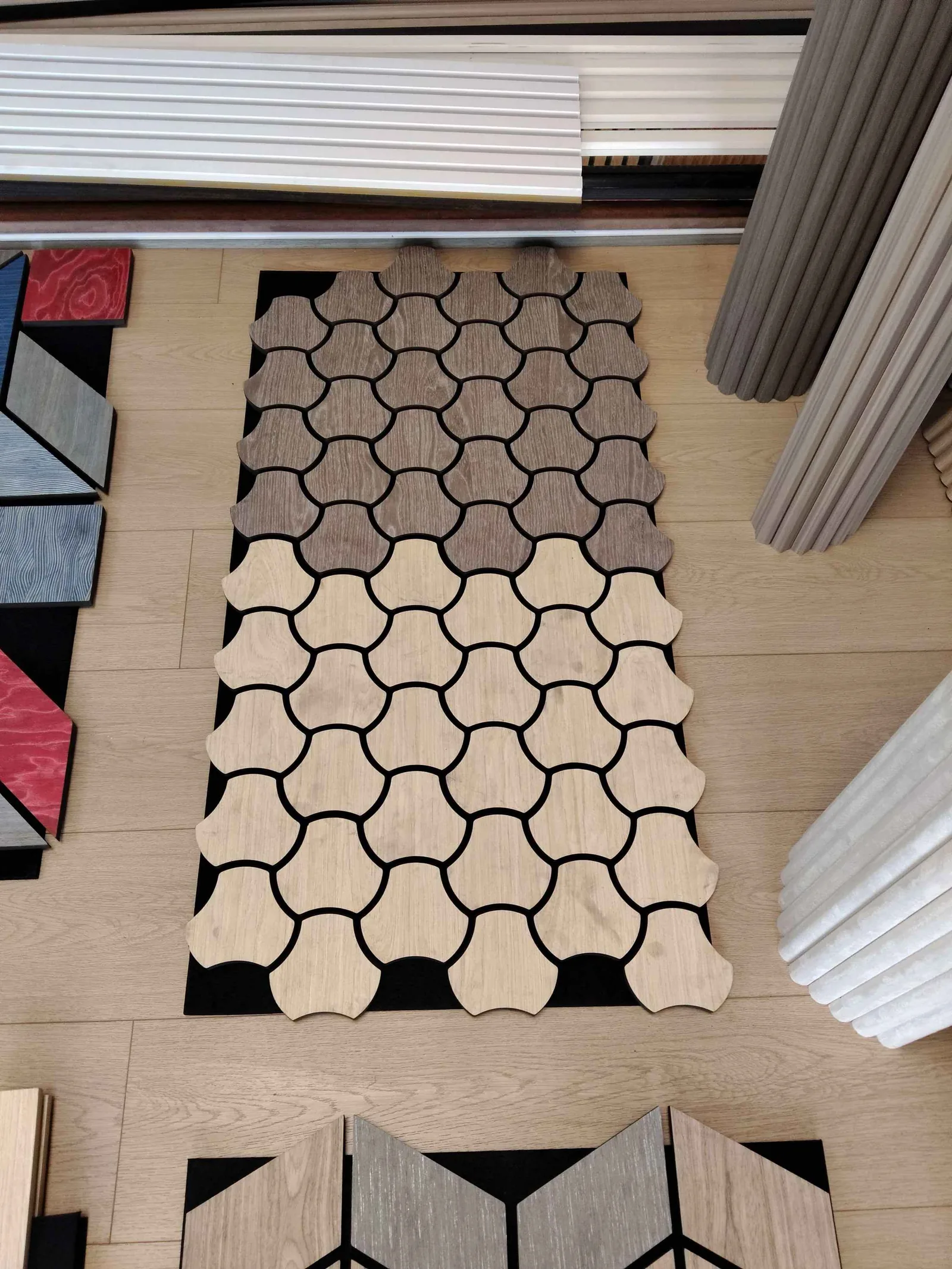
Hotels & Hospitality
Lobbies and atriums are large, hard-surfaced volumes. Guest corridors are narrow and long — there the problem is noise travelling between rooms, and the wall finish has to survive trolleys.
What we recommend
- 21 mm shaped panels for lobby feature walls and columns
- Flexible WQ-1 on curved columns and arched openings
- 9–11 mm straight panels in guest corridors, impact-resistant finish
In corridors, panel damage is the real lifetime cost. Choose the PVC finish over veneer where trolleys run.
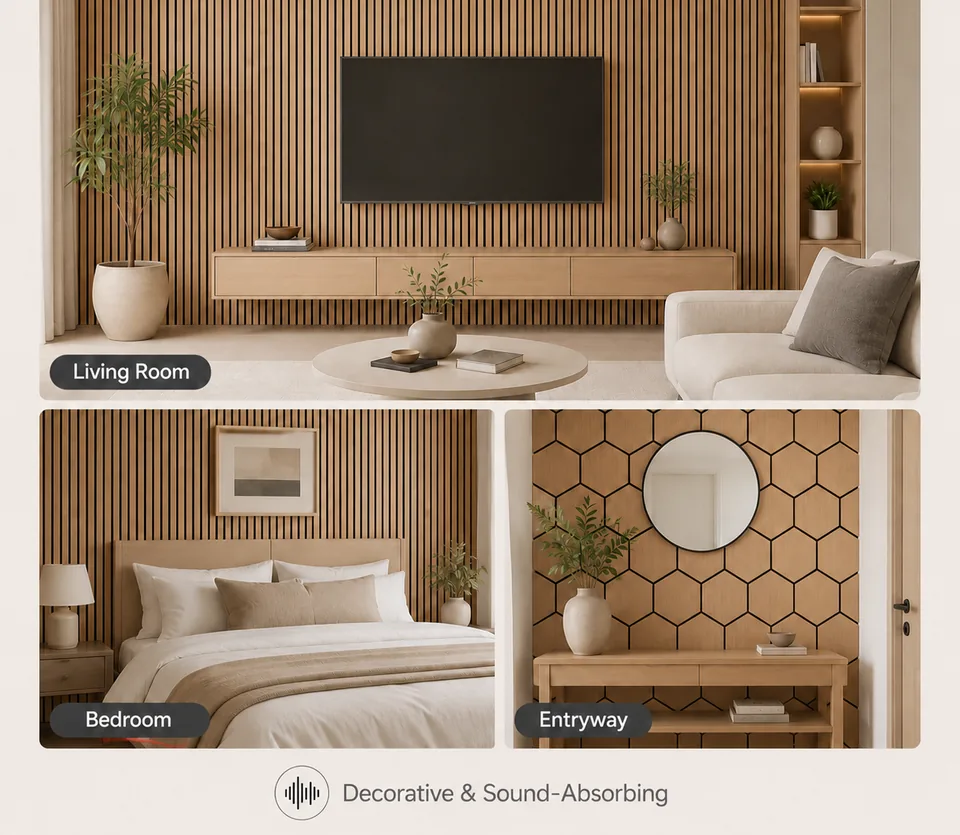
Education — Classrooms & Lecture Halls
A teaching room needs some reverberation — a completely dead room makes the teacher strain. The target is a controlled decay, with clarity at the back row.
What we recommend
- 16 mm on the rear wall and one side wall
- 18 mm in lecture halls above 150 seats
- Keep the front wall and ceiling reflective unless the room is very deep
Coverage matters more than thickness in classrooms: 50–60% of the rear wall in 16 mm beats 20% of the whole room in 21 mm.
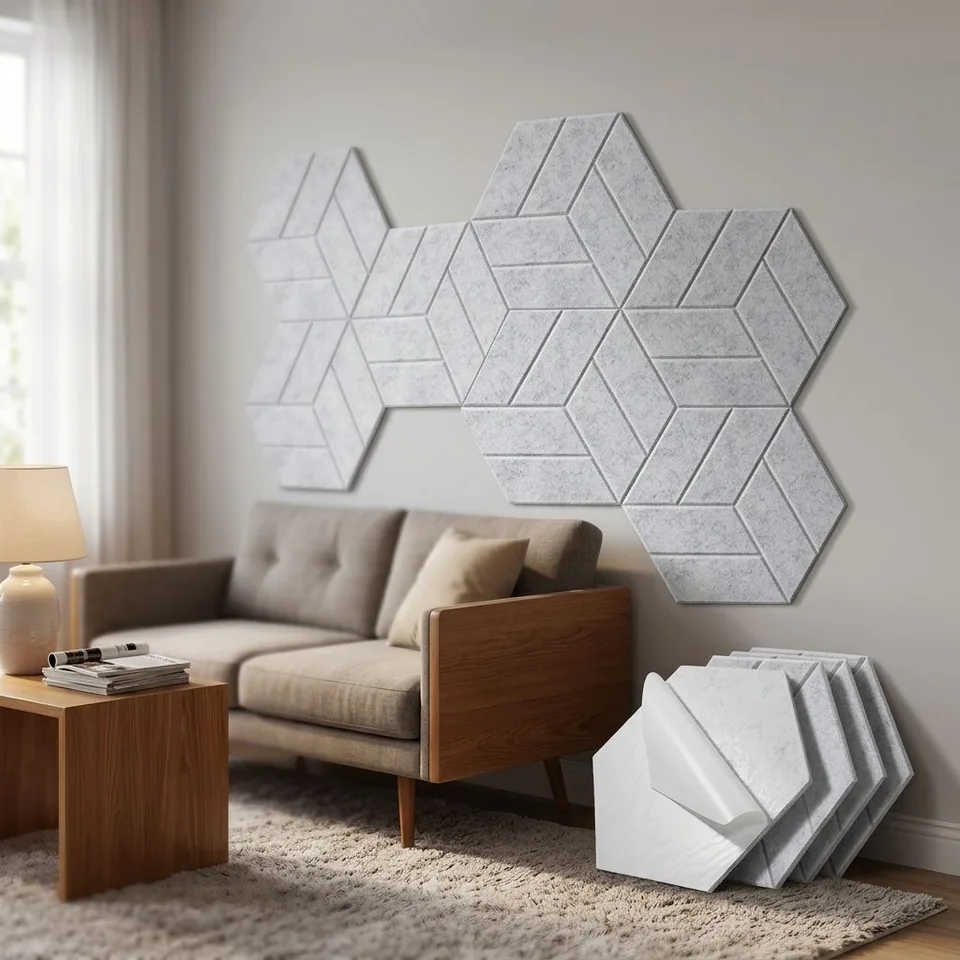
Studios & Home Cinema
Low frequency is the hard part. A 21 mm panel on a direct-fixed wall absorbs speech-band energy well and bass almost not at all.
What we recommend
- 21 mm high-density panel on first-reflection points
- Mount on 50 mm battens to create a cavity — this is what buys low-frequency performance
- Combine with corner treatment for bass, which panels alone cannot solve
If bass is the complaint, the mounting method matters more than the panel. A panel on a cavity beats a thicker panel glued flat.
Restaurants, Cafés & Retail
Hard floors, exposed ceilings and glass frontage make a loud room. Customers leave early and staff raise their voices all day.
What we recommend
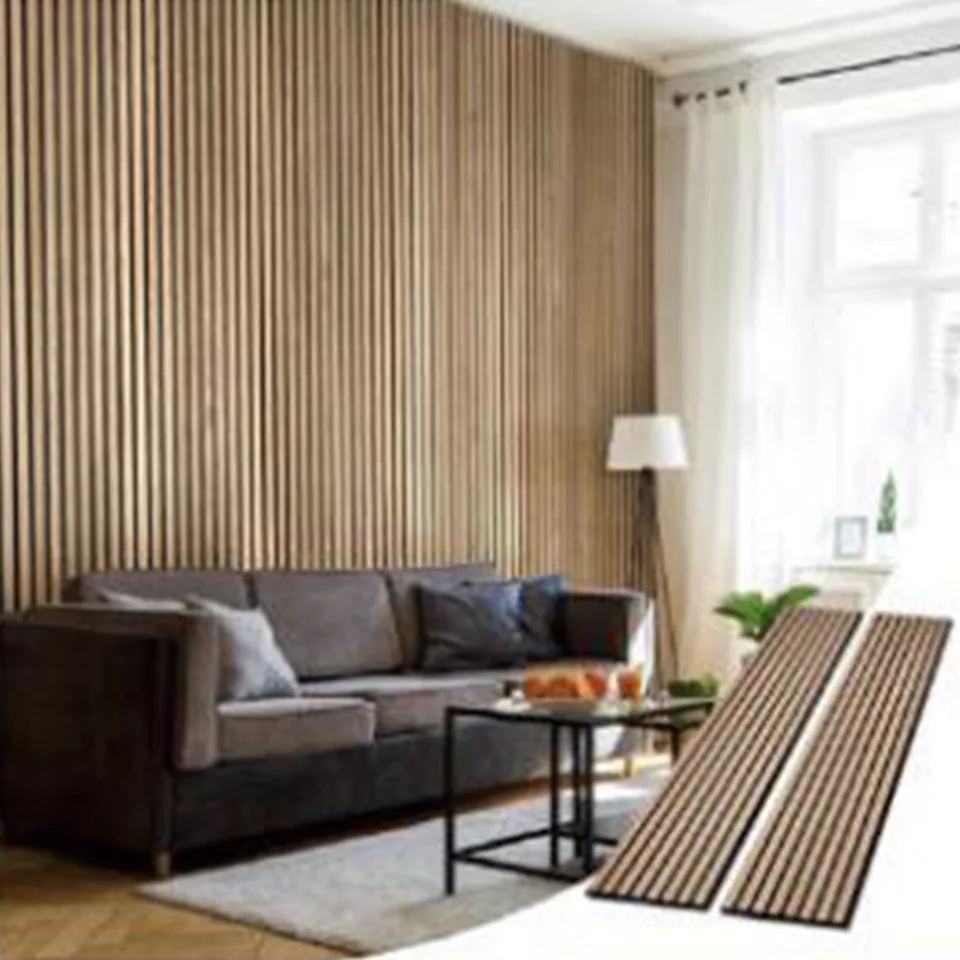
- 11 mm straight panel as a decorative wall that also absorbs
- Ceiling modules where wall area is taken by glazing
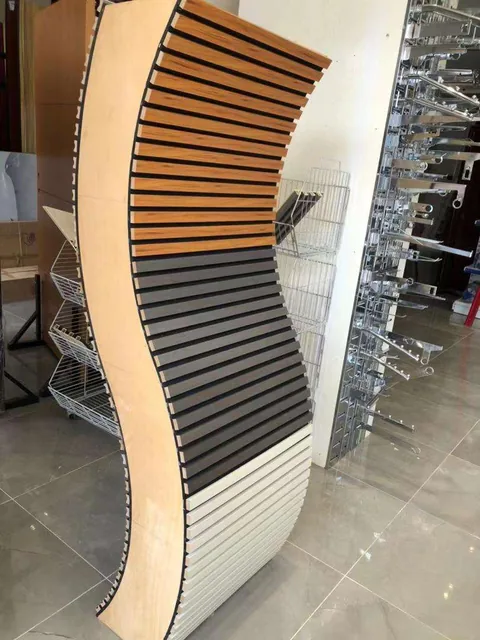
- Shaped panels where the wall is the brand statement
In retail, the panel has to earn its place visually — this is the case for the YX shaped range rather than a plain absorptive panel.
Worship Halls & Mosques
Large volume, stone or tile surfaces, carpet only in part, and a speaker who must be heard without amplification problems. The hardest acoustic case in the region we ship to.
What we recommend
- 21 mm panels on side walls and the rear wall
- Full-height YX-13 (600 × 2400 mm) for continuous relief with no horizontal joint
- Keep the qibla wall and the mihrab area as the design focus — shaped panels here, plain panels elsewhere
In a mosque the sound system usually gets blamed first. Treat the room, then tune the system — the other order never converges.
How much wall to cover
These are starting points for a room with normal furnishing. A bare room with a tiled floor needs more; a carpeted room with curtains needs less.
| Room type | Panel coverage | Usual thickness |
|---|---|---|
| Meeting room | 30–40% of wall area | 16 mm |
| Open plan office | 25–35%, plus ceiling if possible | 11–16 mm |
| Classroom | 50–60% of rear wall, one side wall | 16 mm |
| Hotel corridor | One side, full length | 9–11 mm |
| Restaurant | 35–50% of wall or ceiling | 11–16 mm |
| Worship hall | 40–60% of side and rear walls | 21 mm |
| Home cinema | First-reflection points + corners | 21 mm on battens |
Coverage percentages are practical starting points from our own project experience, not a substitute for a reverberation-time calculation by your acoustic consultant.
Tell us the room and we will tell you the coverage
Send the room dimensions, the floor and ceiling material and what the complaint is (echo, noise from outside, speech unclear). You get a panel schedule and an FOB price.